
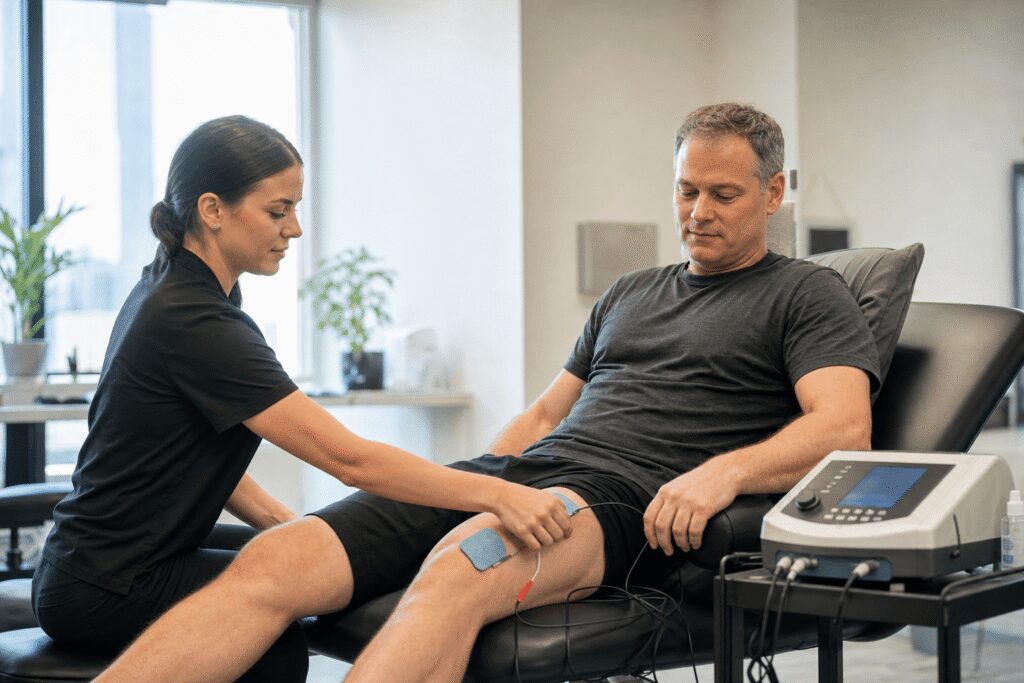
Electrotherapy is a therapeutic technique that uses electrical energy to reduce pain, stimulate muscles, and accelerate tissue healing. If you’re exploring treatment options for chronic pain, injury recovery, or muscle rehabilitation, you’ve likely encountered electrotherapy as part of a comprehensive physiotherapy plan. This evidence-based modality has been used for decades to help patients manage musculoskeletal conditions, post-surgical recovery, and sports injuries.
This article explains what electrotherapy is, explores the different types of electrotherapy treatments available, examines how it works within your body, identifies which conditions respond best to treatment, discusses safety considerations and contraindications, and covers practical details like what to expect during a session and how electrotherapy fits into a complete rehabilitation program. You’ll also learn about insurance coverage options and costs specific to Ontario patients.
Quick Answer
Electrotherapy uses controlled electrical currents delivered through the skin to relieve pain, reduce inflammation, stimulate muscle contractions, and promote tissue healing. Common types include TENS, NMES, interferential therapy, and therapeutic ultrasound. Treatment typically costs $75-$120 per session in Ontario and is often covered by extended health benefits.
What Is Electrotherapy? Definition and Basic Principles
Electrotherapy is a category of physical therapy treatments that uses electrical stimulation to treat pain and promote healing. Unlike medications that circulate throughout your entire body, electrotherapy delivers targeted electrical energy directly to the affected area through electrodes placed on your skin.
The basic principle involves sending controlled electrical currents through body tissues to achieve specific therapeutic effects. These effects range from blocking pain signals to your brain, triggering muscle contractions for strengthening, reducing swelling and inflammation, or accelerating the natural healing process in damaged tissues.
Electrotherapy is not a single treatment but an umbrella term covering multiple distinct modalities, each with different electrical properties, frequencies, and therapeutic applications. A physiotherapist selects the specific type based on your condition, treatment goals, and stage of recovery.
At Greatlife Physio in Richmond Hill, our registered physiotherapists use electrotherapy as one component within personalized treatment plans that combine passive modalities with active rehabilitation exercises.
Key Takeaways
- Understand electrotherapy uses electrical currents to reduce pain and promote healing
- Expect treatment to complement exercise therapy, not replace active rehabilitation
- Verify your specific condition responds well to electrical stimulation modalities
- Ask your physiotherapist which electrotherapy type suits your recovery stage
- Check extended health benefits for coverage before starting treatment sessions
How Does Electrotherapy Work? Mechanisms of Action
Electrotherapy works through several distinct physiological mechanisms, depending on the type of electrical stimulation used. The pain-gate control theory explains one primary mechanism. According to this theory, non-painful electrical signals travel faster along nerve fibers than pain signals. When electrotherapy stimulates these faster sensory nerves, it essentially closes the gate to pain signals, preventing them from reaching your brain.
Electrotherapy also triggers the release of endorphins, your body’s natural pain-relieving chemicals. These endogenous opioids provide longer-lasting pain relief that extends beyond the treatment session itself.
For muscle rehabilitation, electrical stimulation causes muscle fibers to contract by depolarizing motor nerve fibers. This is particularly valuable when voluntary muscle activation is difficult due to pain, swelling, or neurological issues. The repeated contractions help maintain muscle mass, prevent atrophy, and re-educate neuromuscular pathways.
Electrotherapy improves local blood circulation by causing rhythmic muscle contractions and dilating blood vessels. Enhanced circulation delivers more oxygen and nutrients to injured tissues while removing metabolic waste products, accelerating the natural healing process.
We often combine interferential therapy with manual therapy at our Richmond Hill clinic because the electrical stimulation reduces protective muscle guarding, allowing deeper tissue mobilization during the same session without increasing patient discomfort.
Types of Electrotherapy Treatments
Several distinct types of electrotherapy exist, each with specific applications, electrical characteristics, and clinical indications. Your physiotherapist selects the appropriate modality based on your condition, treatment phase, and therapeutic goals.
TENS (Transcutaneous Electrical Nerve Stimulation)
TENS uses low-voltage electrical currents to provide pain relief without causing muscle contractions. The device delivers electrical impulses through electrodes placed on your skin near the pain site or along relevant nerve pathways. TENS is particularly effective for chronic pain conditions including arthritis, fibromyalgia, and neuropathic pain. It is also commonly used for acute injuries, post-surgical pain, and menstrual discomfort. Because TENS units are portable and safe for home use, many patients continue treatment between physiotherapy sessions.
NMES (Neuromuscular Electrical Stimulation)
NMES specifically targets muscle tissue to cause contractions, making it fundamentally different from pain-focused TENS. The electrical current bypasses your voluntary nervous system and directly stimulates motor nerves, causing muscles to contract as they would during exercise. This modality is essential for preventing muscle atrophy after surgery or during immobilization, re-educating muscles after neurological injury, and strengthening weakened muscles.
Interferential Therapy (IFT)
Interferential therapy uses two medium-frequency currents that intersect within your tissues to create a low-frequency therapeutic effect deep inside the body. This allows deeper tissue penetration than TENS while remaining comfortable. IFT excels at treating deep tissue pain, reducing inflammation in joints, and managing edema. Common applications include chronic low back pain, osteoarthritis, and sports injuries involving deep structures.
Therapeutic Ultrasound
Therapeutic ultrasound uses high-frequency sound waves (typically 1-3 MHz) to create mechanical vibrations in tissue, generating deep heat and promoting cellular activity. While technically different from electrical stimulation, it is often grouped with electrotherapy modalities. Ultrasound is particularly effective for tendinitis, bursitis, scar tissue, and ligament injuries.
Benefits and Conditions Treated with Electrotherapy
Electrotherapy provides multiple therapeutic benefits across a wide range of musculoskeletal and neurological conditions. Pain relief is the most common benefit. Whether you are dealing with acute injury pain, chronic arthritis, or post-surgical discomfort, electrotherapy can significantly reduce pain intensity and improve your ability to participate in active rehabilitation.
Reduced inflammation and swelling occur through improved circulation and altered cellular metabolism. Muscle strengthening and re-education benefit patients who cannot voluntarily activate muscles due to pain, neurological damage, or post-surgical inhibition. Accelerated tissue healing results from enhanced circulation, increased cellular activity, and improved nutrient delivery to injured areas. Improved range of motion occurs when electrotherapy reduces pain and muscle guarding, allowing more comfortable and effective stretching.
Common conditions treated with electrotherapy include chronic low back pain, neck pain, osteoarthritis in knees, hips, and shoulders, rotator cuff injuries, tennis elbow and golfer’s elbow, plantar fasciitis, ACL reconstruction recovery, muscle strains and ligament sprains, post-surgical rehabilitation, carpal tunnel syndrome, sciatica, and fibromyalgia.
Ready to start your recovery?
Our registered physiotherapists in Richmond Hill offer personalized treatment plans with direct billing. WSIB and MVA accepted.
Is Electrotherapy Safe? Contraindications and Precautions
Electrotherapy is generally safe when administered by trained healthcare professionals, but specific contraindications and precautions must be observed. Understanding these safety considerations ensures appropriate treatment selection.
Absolute contraindications where electrotherapy should never be used include cardiac pacemakers and implanted defibrillators, as electrical currents can interfere with device function. Pregnancy requires avoiding electrical stimulation over the abdomen, pelvis, and lower back due to unknown effects on fetal development. Active cancer or tumors in the treatment area is contraindicated because increased circulation might theoretically promote cancer spread.
Never apply electrodes over the carotid sinus in the neck, as stimulation can cause dangerous blood pressure and heart rate changes. Avoid placement over the eyes and through the brain. Deep vein thrombosis requires avoiding electrical stimulation over the affected area because enhanced circulation might dislodge a blood clot.
Relative contraindications require careful assessment and modification rather than complete avoidance. These include impaired sensation, where patients cannot accurately report discomfort, increasing burn risk. Skin conditions including open wounds, rashes, or infections at electrode sites require alternative placement or delayed treatment. Epilepsy may require precautions depending on seizure triggers and type of electrical stimulation used. Metal implants including joint replacements and surgical plates generally do not contraindicate treatment, though electrode placement may need adjustment to avoid concentrating current around metal.
Side effects are rare when electrotherapy is properly administered. Skin irritation under electrodes occasionally occurs, usually from sensitivity to electrode gel or tape rather than the electrical current itself. Some patients experience muscle soreness after NMES, similar to post-exercise soreness. Burns are extremely rare with modern equipment but can occur if electrodes are improperly applied.
At Greatlife Physio, our physiotherapists complete comprehensive screening before initiating electrotherapy to identify any contraindications specific to your medical history. We adjust treatment parameters throughout each session based on your feedback and tissue response to ensure safety and effectiveness.
What to Expect During an Electrotherapy Session
Understanding what happens during an electrotherapy session helps reduce anxiety and ensures you get maximum benefit from treatment. Sessions are comfortable, non-invasive, and typically form one component of a broader physiotherapy appointment.
Your first session begins with assessment. Your physiotherapist evaluates your condition, reviews your medical history, identifies contraindications, and explains which type of electrotherapy is most appropriate. This discussion includes what you should feel, expected benefits, and treatment frequency.
Positioning matters significantly. You will be positioned to allow easy access to the treatment area while remaining comfortable for 10-30 minutes. The area must be exposed, so wear loose, easy-to-adjust clothing.
Electrode application follows specific patterns. After cleaning your skin, the therapist applies conductive gel and positions electrodes around or over the affected area. Electrodes are secured with tape or elastic straps.
The sensation varies by modality type. TENS typically feels like comfortable tingling or buzzing. NMES produces visible muscle contractions that feel like your muscle is working. Interferential therapy creates a deep, penetrating tingling sensation. Therapeutic ultrasound generates gentle warmth rather than an electrical feeling.
Treatment duration depends on the modality and condition being treated. TENS sessions often last 20-30 minutes. NMES runs 10-20 minutes per muscle group. Interferential therapy typically continues for 10-15 minutes. Ultrasound takes only 5-10 minutes for most areas.
After treatment, electrodes are removed and gel is wiped away. Many patients notice immediate pain reduction or improved mobility. Your physiotherapist typically follows electrotherapy with manual therapy, stretching, or exercise while tissues are receptive and pain is reduced.
Treatment frequency varies considerably. Acute injuries might receive electrotherapy 2-3 times per week initially. Chronic conditions may involve once or twice weekly sessions over several weeks.
Sessions at our Richmond Hill clinic typically integrate electrotherapy into 45-60 minute appointments that include assessment, manual therapy, exercise prescription, and education. This ensures you receive comprehensive care rather than passive treatment alone.
How Electrotherapy Integrates Into Your Complete Treatment Plan
Electrotherapy should never exist in isolation. It is most effective when integrated into a comprehensive rehabilitation program that addresses all aspects of your condition and recovery.
The role of passive versus active treatment is critical to understand. Electrotherapy is a passive modality: something done to you rather than by you. While valuable for pain management and preparing tissues for rehabilitation, passive treatments alone rarely produce lasting functional improvement.
Research consistently shows that active treatments including exercise, movement training, and gradual return to function produce superior long-term outcomes compared to passive treatments used alone. Electrotherapy’s primary value lies in enabling more effective active treatment by reducing pain and improving tissue readiness.
Comparison With Other Passive Modalities
Understanding how electrotherapy compares to other passive treatments helps determine the best approach for your situation.
Heat therapy increases blood flow, reduces muscle tension, and improves tissue extensibility. It is excellent before stretching and for chronic muscle pain. However, heat should be avoided in acute inflammation where it can increase swelling. Electrotherapy can reduce both acute and chronic pain without the same inflammation concerns.
Ice therapy reduces inflammation, numbs acute pain, and decreases metabolic activity in injured tissues. It is the preferred passive modality immediately after injury but provides only temporary relief and does not promote healing like electrotherapy can.
Manual therapy including joint mobilization, soft tissue release, and muscle energy techniques addresses movement restrictions and tissue tension that electrical stimulation cannot. Manual therapy and electrotherapy complement each other well, with electrical stimulation reducing pain and guarding before hands-on treatment.
The choice between modalities depends on your condition stage, treatment goals, and tissue type involved. Acute inflammation responds better to ice initially, while chronic muscle tension may benefit more from heat or electrotherapy. Electrotherapy offers unique advantages for nerve pain and deep tissue inflammation that other passive modalities cannot provide. Your physiotherapist combines these approaches based on your individual presentation and response to treatment.
| Modality | Best Applications | When to Avoid |
|---|---|---|
| Electrotherapy (TENS/IFT) | Acute and chronic pain, deep tissue inflammation, nerve pain | Pacemakers, pregnancy, over carotid sinus |
| Heat Therapy | Chronic muscle tension, before stretching, stiffness | Acute inflammation, recent injury, impaired sensation |
| Ice Therapy | Acute injuries, post-treatment soreness, acute inflammation | Circulatory disorders, cold hypersensitivity, before activity |
| Manual Therapy | Joint restrictions, muscle tension, scar tissue | Acute fractures, severe osteoporosis, infections |
Active Treatment and Exercise Integration
The transition from passive to active treatment determines long-term success. Electrotherapy creates a window of reduced pain during which active treatment becomes more tolerable and effective. Immediately after electrotherapy, pain is reduced and tissues are prepared for movement, making this the ideal time for stretching, joint mobilization, and initial strengthening exercises.
At Greatlife Physio, our physiotherapists create treatment plans that progressively shift from passive to active interventions. We might use interferential therapy and manual techniques heavily in weeks 1-3, then transition to minimal electrical stimulation with emphasis on strengthening and movement training in weeks 4-8.
Multidisciplinary integration enhances treatment effectiveness. A patient might receive electrotherapy and exercise from their physiotherapist, complemented by chiropractic care for spinal alignment or massage therapy for muscle tension.
Insurance Coverage and Costs for Electrotherapy in Ontario
Understanding insurance coverage and costs helps you plan for electrotherapy treatment without financial surprises. Coverage varies significantly depending on your insurance source and specific policy.
OHIP and Public Coverage
OHIP (Ontario Health Insurance Plan) does not cover outpatient physiotherapy services including electrotherapy for most adults. Limited coverage exists for specific populations including seniors eligible under certain programs and children with specific conditions. Most Ontario residents require private insurance or pay out-of-pocket for physiotherapy services.
Extended Health Benefits
Extended health benefits through employer or private insurance plans typically cover physiotherapy including electrotherapy as part of treatment. Most plans provide annual maximums ranging from $300-$2000 per calendar year. Coverage details vary widely between insurers and specific plans. Review your policy to understand your annual maximum, per-visit limits, referral requirements, and whether pre-authorization is needed. Direct billing to your insurance company simplifies the payment process by eliminating upfront payment and reimbursement paperwork.
At Greatlife Physio, we offer direct billing to most major insurance providers including Sun Life, Manulife, Great-West Life, Canada Life, Green Shield, Industrial Alliance, and many others. Our administrative team verifies your coverage before your first appointment to prevent surprises.
WSIB Coverage
WSIB (Workplace Safety and Insurance Board) covers physiotherapy including electrotherapy for approved workplace injury claims. Treatment requires approval from your case manager but typically includes comprehensive rehabilitation without annual maximums. WSIB physiotherapy coverage at our Richmond Hill clinic includes all required documentation handling.
Motor Vehicle Accident Claims
Motor vehicle accident (MVA) claims provide coverage through your auto insurance policy’s accident benefits. Ontario’s standard accident benefits include up to $65,000 in medical and rehabilitation benefits for non-catastrophic injuries, which covers physiotherapy and electrotherapy. Catastrophic injuries receive up to $1,000,000 in medical benefits. Treatment requires approval through your insurance adjuster and completion of OCF-18 treatment plans submitted by your healthcare provider.
MVA coverage includes initial assessments, ongoing treatment sessions, and home exercise equipment if deemed necessary. Your physiotherapist communicates directly with your adjuster to obtain pre-approvals and provide progress reports. Our clinic assists with all MVA claim documentation and communication with adjusters to streamline your treatment access.
Veterans Affairs and Other Coverage
Veterans Affairs Canada (VAC) benefits may cover physiotherapy for eligible veterans. Coverage depends on whether your condition is service-related and your specific benefit level. Some employer-sponsored health spending accounts (HSA) or wellness accounts also cover physiotherapy and can be used for electrotherapy treatment.
Out-of-Pocket Costs and Tax Deductibility
When paying privately, physiotherapy sessions typically range from $75-$120 in Ontario, with electrotherapy included as part of the treatment rather than billed separately. Initial assessments often cost more ($100-$150) due to additional time required. The number of sessions needed varies widely based on your condition. Acute injuries might resolve in 4-6 sessions over 3-4 weeks. Chronic conditions often require 8-12 sessions or more.
Physiotherapy expenses including electrotherapy can be claimed as medical expenses on your income tax return if they exceed 3% of your net income or $2,479, whichever is less. Keep all receipts for tax purposes.
Frequently Asked Questions
Finding the Right Electrotherapy Treatment for Your Condition
Electrotherapy offers valuable benefits for pain relief, muscle rehabilitation, and tissue healing when used appropriately as part of comprehensive physiotherapy care. The key to successful outcomes lies in proper patient selection, choosing the right modality for your specific condition, and integrating electrical stimulation with active rehabilitation including exercise and functional training.
Not everyone responds equally to electrotherapy. Conditions involving clear tissue damage, inflammation, or muscle inhibition typically respond better than complex chronic pain with multiple contributing factors. Your response to initial treatment sessions helps predict whether continued electrotherapy will benefit your recovery.
Remember that passive treatments including electrotherapy create opportunities for active rehabilitation but rarely solve problems independently. The most successful treatment plans progressively emphasize your active participation through exercise, movement training, and return to normal activities while reducing reliance on passive interventions.
If you are experiencing pain, recovering from injury, or dealing with chronic musculoskeletal conditions, a comprehensive assessment determines whether electrotherapy is appropriate for your situation. Our team at Greatlife Physio in Richmond Hill provides evidence-based physiotherapy services that integrate electrotherapy with manual therapy, exercise prescription, and education to address your specific needs.
Ready to explore whether electrotherapy can help your condition? Book a consultation with our registered physiotherapists in Richmond Hill. We offer personalized treatment plans, direct billing to most insurance providers, and accept WSIB and motor vehicle accident claims. Call us at (647) 948-4202 or schedule online to start your recovery today.
